
Inside Local Stock: How Same-Day Vape Delivery Actually Works
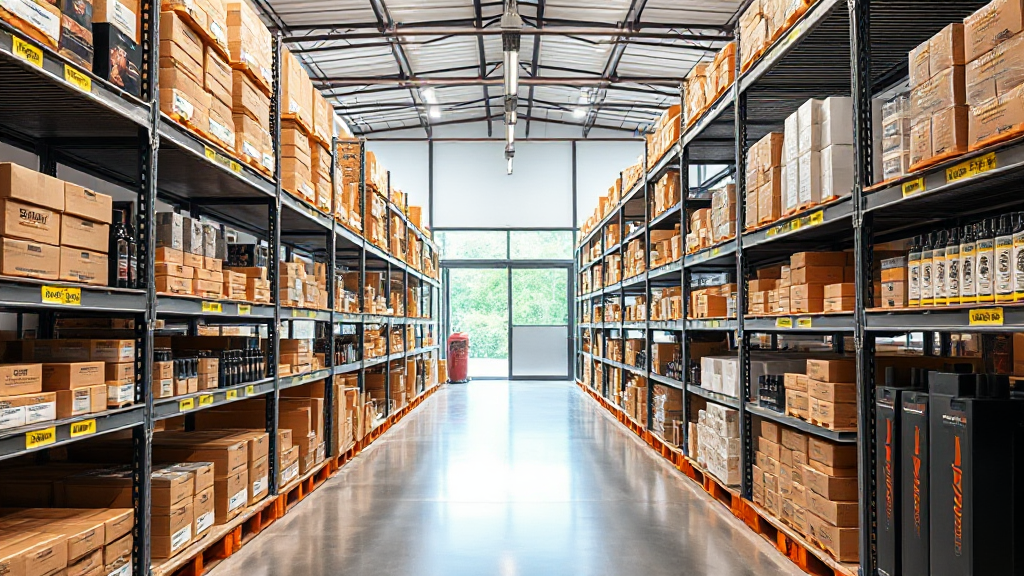
At 9am on a Tuesday, a stockroom in an industrial building on the eastern edge of Singapore is already awake. Fluorescent tubes hum over steel shelving. A picker scans a shelf label, lifts a sealed Elf Bar box, and drops it into a padded mailer. By 9:04, that parcel has a printed waybill with a district code on it. By 9:40, it is in a rider’s top box. By 2pm, it is in someone’s hands across the island. That four-to-five hour window is not magic, and it is not a marketing slogan. It is the visible end of a physical chain that starts long before the order is placed. Understanding that chain is the difference between a buyer who hopes a promise will hold and a buyer who knows why it will. This is a look inside how local stock turns into doorstep delivery, and why Singapore lana vape buyers keep running into the same phrase: ready stock, same day.
Stage One: The Stockroom Is the Product
Most people think of a vape purchase as a transaction between a buyer and a website. In reality, the first transaction is between a retailer and a warehouse slot. A seller who can promise same-day delivery has already paid for that promise weeks earlier, in the form of inventory sitting on a shelf instead of in a shipping container somewhere over the South China Sea.
Picture the pick face: rows of shallow bins, each labeled by model and flavor, each holding a small number of units rather than a full carton. The pick face is deliberately thin because it is meant to be replenished from bulk pallets at the back of the room. When a picker reaches for the last unit in a bin, a replenishment task fires automatically. That is the quiet mechanism that keeps the shelf from going empty at 9am on a Tuesday.
The reason this matters to a buyer is simple. A seller without local stock is not really selling a product; they are selling a forwarding service. They take your order, place it against an overseas shipment, and hope the timing lines up. A seller with local stock is selling something that already exists within the same customs boundary as you. One of those models can absorb a demand spike on a Friday evening. The other cannot.
Stage Two: Why Local Stock Positioning Decides the Cut-Off Time
Every same-day delivery operation has a cut-off time, and that cut-off is not arbitrary. It is calculated backwards from the last possible dispatch, minus packing time, minus rider allocation, minus a buffer for the inevitable late order.
Walk the math. If the final dispatch leaves the warehouse at 6pm, and packing takes twenty minutes per batch, and rider allocation takes fifteen minutes, then the last order that can realistically be promised same-day lands somewhere around 5:15pm. Push the cut-off later and you are not being generous; you are building a queue that will fail. Push it earlier and you are leaving capacity on the table.
This is where lana vape sg operations differ from drop-ship sellers. A drop-shipper’s cut-off is set by a supplier’s dispatch schedule, which may be in another time zone. A local-stock seller’s cut-off is set by their own warehouse, which means it can be tuned, staffed, and trusted. Buyers who have been burned by a “same-day” promise that slipped to three days are usually dealing with the second model, not the first.
There is a second variable here that rarely gets mentioned: stock depth. A warehouse with three units of a popular flavor is technically holding local stock, but it is not holding enough to survive a weekend. Depth is what separates a seller who can say yes on Saturday morning from one who has to say sorry by noon.
Stage Three: The Order Lands and the Clock Starts
When an order hits the system, several things happen in parallel rather than in sequence. The inventory record is decremented. A picking task is generated for the nearest available picker. A payment authorization is confirmed. A delivery zone is assigned based on the postal code. None of this is glamorous, but each step is a place where a slow operation loses minutes that compound.
Consider what happens when inventory is not live. If the website shows a product as available but the shelf is empty, the picker walks to the bin, finds nothing, flags it, and a human has to intervene. That single interruption can add fifteen to thirty minutes to an order that should have taken two. Multiply that across a busy afternoon and the whole dispatch schedule slides.
Live inventory is not a feature; it is the precondition for everything that follows. Without it, same-day is a coin flip. With it, the rest of the chain has something solid to stand on.
Stage Four: Packing, Discretion, and the Physical Handoff
Packing is the stage buyers think about least and notice most. A parcel that arrives crushed, taped badly, or obviously labeled is a parcel that has already failed a basic test of professionalism. Discreet packaging is not just about privacy, though that matters. It is also about protecting the device inside from the compression and vibration of a scooter ride across a humid city.
The standard sequence is straightforward: device in an anti-static sleeve, sleeve in a padded mailer, mailer sealed with tamper-evident tape, waybill applied, parcel scanned into a dispatch batch. Nothing about this is exotic. What matters is consistency. A seller who does this the same way on a quiet Monday and a frantic Friday is a seller whose failure rate stays low.
This is also the stage where the parcel stops being a product and becomes a shipment. From here on, the only thing that matters is time and location. The warehouse has done its job. The road takes over.
Stage Five: Routing Across a Small, Dense Island
Singapore is a strange delivery environment. It is small enough that no point is more than about an hour from any other point by road, but dense enough that the last three kilometers can take longer than the first thirty. A rider leaving an eastern warehouse at 11am can be in Jurong by noon and in Woodlands by 12:40, but only if the route is sequenced correctly.
Good routing treats the island as a set of overlapping zones rather than a single map. Orders are batched by district, then sequenced within each district by street-level proximity. A rider does not zigzag; they sweep. The difference between a swept route and a zigzagged one is often forty minutes across a full shift, which is the difference between making the last promise and missing it.
This is also where Singapore vape delivery starts to look less like retail and more like logistics. The product is small, light, and high-value, which makes it ideal for two-wheeled courier work. It does not need a van, a cold chain, or special handling. It needs a rider who knows which car park entrance saves five minutes and which lift lobby is faster than the stairs.
Stage Six: The Last Hundred Meters and the Proof of Handover
The final stage is the one buyers judge everything by, and it is also the one most vulnerable to friction. A rider arrives at a building, needs to find the right unit, needs the buyer to be reachable, and needs a clean handover. Any one of those three can stall a delivery that was otherwise perfect.
Mature operations solve this with preparation rather than improvisation. Delivery notes are checked before dispatch. Contact numbers are verified at order time. Time windows are communicated so the buyer knows roughly when to expect a knock. When a rider has to call three times and wait ten minutes, that is not a rider problem; it is an upstream data problem that should have been caught at packing.
Proof of handover matters too, both for the buyer and the seller. A photo, a signature, or a confirmed delivery code closes the loop and creates a record. That record is what makes a second order feel safe. It is also what allows a seller to investigate a dispute without guessing.
For buyers comparing options, this stage is where Vape delivery sg services separate themselves from generic couriers. A general courier has no idea what is in the parcel and no incentive to treat it carefully. A dedicated vape delivery operation knows the product, knows the rules, and knows that a failed handover costs more than the delivery fee.
Stage Seven: What the Chain Means for You as a Buyer
Step back from the individual stages and a pattern emerges. Same-day delivery is not a single capability; it is the sum of seven smaller capabilities, each of which can fail independently. Local stock, live inventory, tuned cut-off times, consistent packing, smart routing, prepared handover data, and clean proof of delivery. A seller who is strong in six of seven will still miss promises regularly. A seller who is strong in all seven can make same-day look easy, which is exactly why it is hard to copy.
For a buyer, this translates into a short list of questions worth asking before ordering. Does the seller hold stock locally or forward it from overseas? Is inventory live on the site? What is the actual cut-off time, and is it stated clearly? Is packaging discreet by default? Is there a proof-of-delivery mechanism? None of these questions require technical knowledge. They just require knowing what to look for.
The practical payoff is that you stop treating delivery speed as luck. When you understand that a parcel’s journey begins on a shelf at 9am and ends at a doorstep by mid-afternoon, you can predict which sellers will hit that window and which will not. You can also spot the difference between a seller who says “same-day” because it sounds good and one who says it because the warehouse, the rider, and the route are all lined up behind the promise.
That is the real value of looking inside local stock. It turns a marketing claim into a physical process you can evaluate. And once you can evaluate it, choosing where to buy becomes a much simpler decision. For buyers who want to see what a properly stocked, locally positioned operation looks like in practice, Sg vape shop delivery is a useful reference point, and Lana vape same day delivery is the promise that the whole chain exists to keep.
Leave a Reply